What You Pay
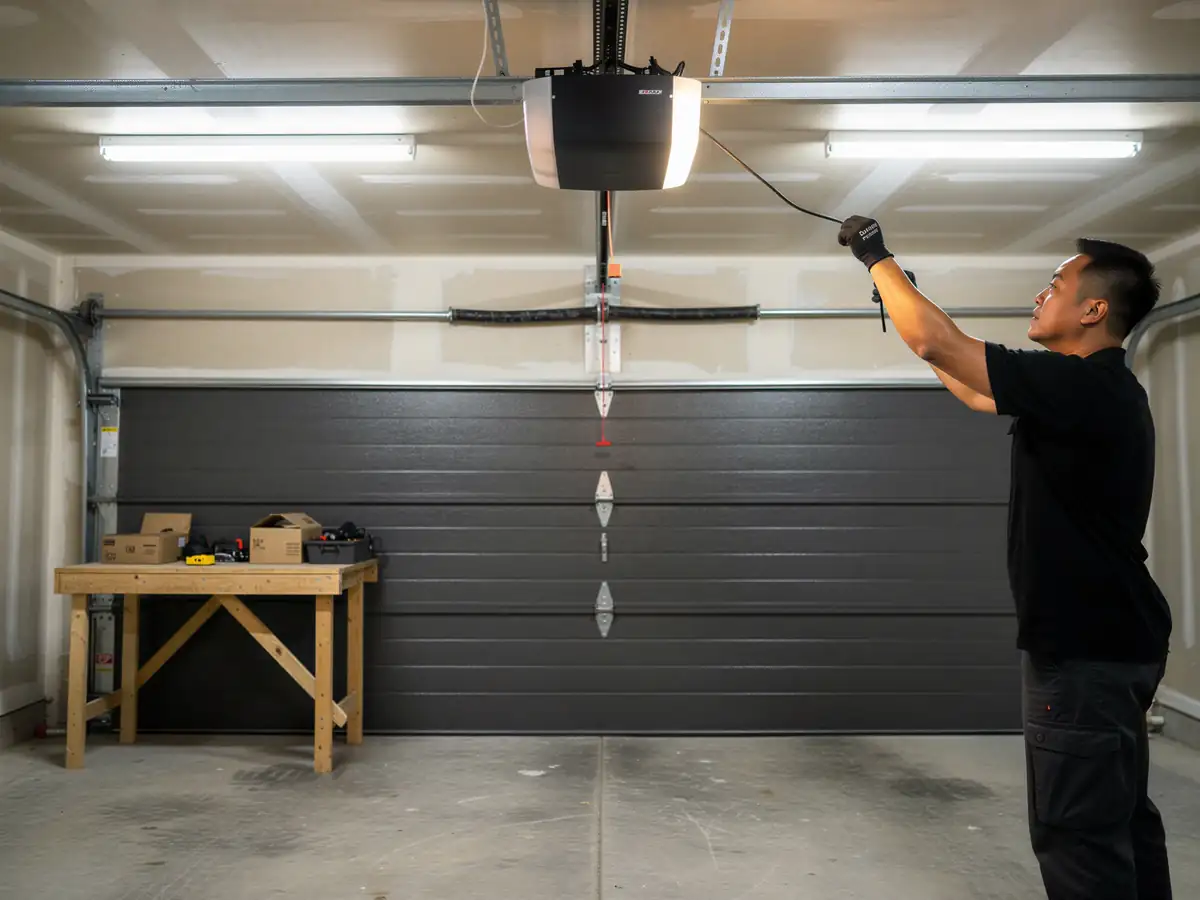
We're not going to put a number on this page, because the honest number depends on what's actually behind your wall - the brand of opener, whether the circuit board is original, how old the door itself is. What we can tell you is what drives the cost up or down in this area. Most of the opener hardware we pull out in Yuba City dates back to houses built between 1944 and 2007, with the bulk of that stock going up in the 1960s and 70s. An opener that age usually isn't a simple fuse-and-go fix - the logic board has degraded, the capacitor's swollen, or the whole unit is a discontinued model with no parts left to order. That pushes a job from a repair toward a full replacement, which costs more up front but doesn't leave you back on the phone in six months. If your opener still runs on a chain-drive unit from the Carter era of garage tech, expect the quote to reflect a swap, not a patch. We'd rather tell you that before the truck rolls than after.
The one thing we won't do is sell you a board-level repair on a 30-year-old opener just to hit a lower number today. It almost never holds.
The Problem
Yuba City sits in a severe-heat climate band, and that heat is what kills opener circuit boards and capacitors years before the chain or belt wears out. The motor housing sits exposed in an attached garage that can run well past the attic temperature most manufacturers rate their electronics for, and it does that every summer, for years, until the board finally gives out - usually without warning, usually on the hottest week of the year when you need the door the most. Add to that the fact that a lot of the stock in this area was built in the 1960s and 70s, before anyone wired a garage for a dedicated opener circuit, and you get openers pulling power through old, undersized runs that heat up faster than they should. Across the roughly 30,380 households we serve, with 15,263 of those owner-occupied houses, the opener failures cluster hardest in the older pockets built before 1980. When the grid has a rough afternoon and the power blinks, that's usually the moment an already-cooked board finally quits. It's not bad luck. It's thirty-plus summers of heat cycling catching up with a part that was never built to last that long in this climate.
How Local Conditions Play In
In the sixteen named communities we work, from Marysville four miles off to Biggs twenty miles out, the mid-century opener is the single most common call we get, and the pattern holds whether we're in the older core or out toward Wheatland or Rio Oso. The houses nearest the center of the service area tend to be the oldest, with hardware that's outlived at least one opener generation already. Heat is the constant across all of it - the severe band this area sits in doesn't spare any particular pocket, so a house in Sutter sees the same board failures as one closer in. What changes block to block is wiring age and attic venting, both tied back to when the house went up. A house built in the 1979 median year is a different animal, electrically, than one from the 1990s stock mixed in across the newer additions. We size the opener and the circuit to the house we're actually standing in front of, not to a national average, because in this climate the average doesn't hold for long.