What You Pay
We don't post a flat number here because roller jobs vary more than people expect. A single cracked roller on an otherwise sound track is a short visit. A full set of eight to ten rollers, especially if the track itself has worn grooves from years of metal-on-metal contact, is a longer job with more parts on the truck.
The other variable is roller type. Steel rollers with open bearings are the cheapest part but the loudest and the first to wear. Nylon rollers with sealed bearings cost more per roller but run quieter and last longer, which matters if your door sees several cycles a day. We'll tell you on site which your door actually needs instead of defaulting to the priciest option.
One honest limit: if your track is bent or the rollers have been grinding long enough to chew up the track rail, replacing rollers alone won't fix the noise. At that point you're looking at track replacement too, and we'll say so rather than sell you a roller swap that won't hold.
What You Are Seeing
The usual tip-off is sound before it's a safety problem. A door that used to glide now grinds, squeals, or thunks as it passes a particular spot on the track, every single cycle. That repeating thunk is a roller with a flat spot or a cracked bearing hitting the rail the same way each time.
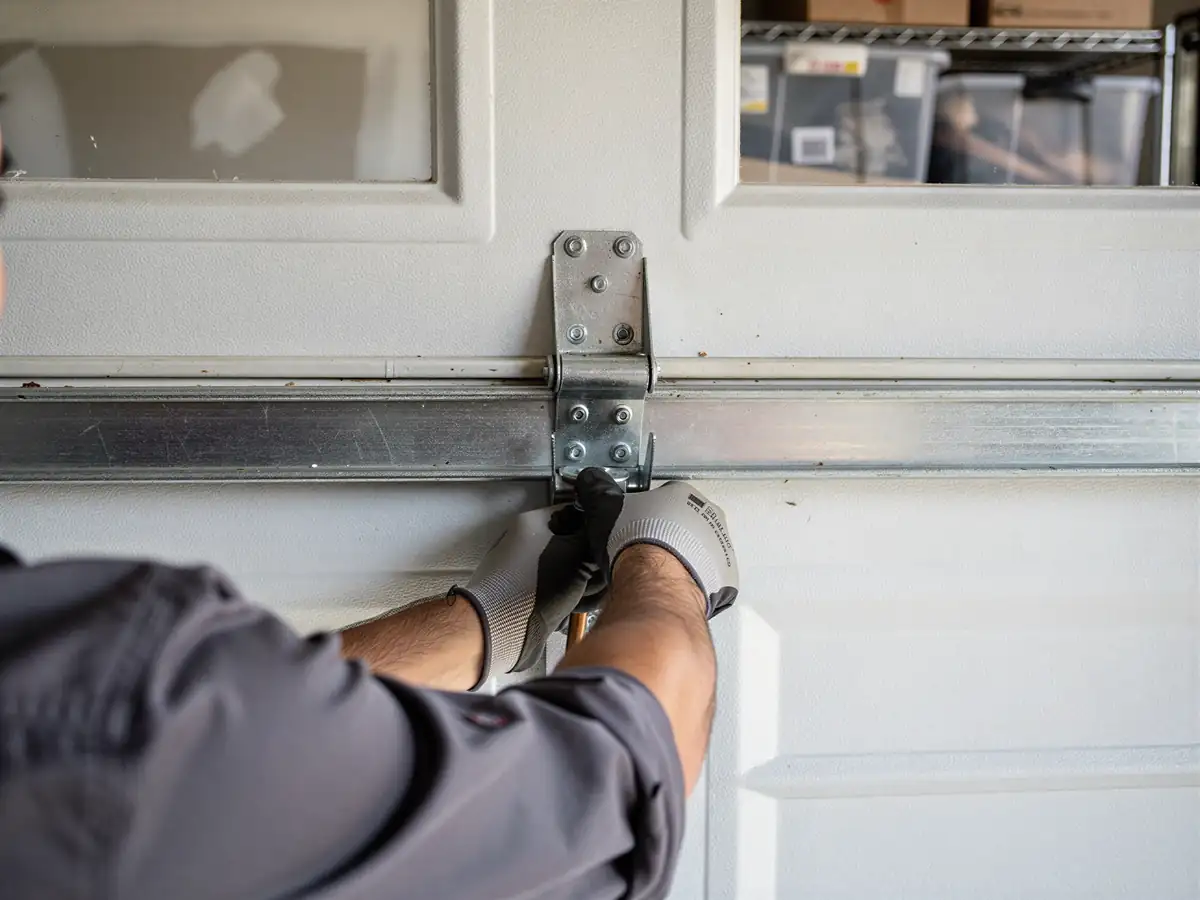
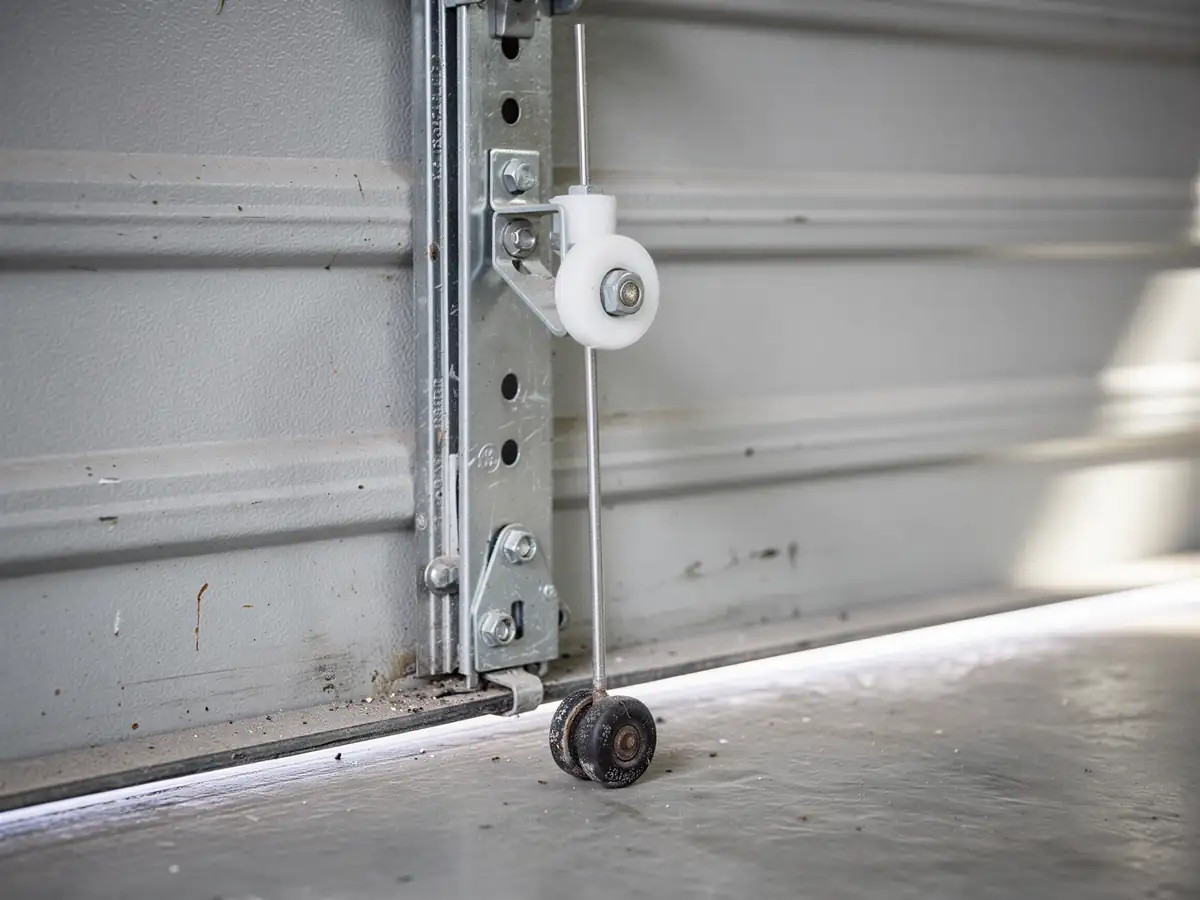
Some owners notice the door shaking side to side as it travels, or catching slightly and needing a little extra push on the opener before it continues. Others see it visually: a roller sitting at an angle instead of square in the track, or a roller that's simply missing its wheel and riding on the bare stem.
If you look at the rollers themselves and see cracked plastic, flattened wheel faces, or rust streaking down from the bearing, those are worn rollers, not a spring or opener problem. Worth knowing the difference before a repair call, since roller work and spring work are priced and scheduled differently.
What Causes It Around Here
This matters more in Yuba City than it would somewhere with newer housing
Across the service area, homes were built mostly between 1944 and 2007 with a median year of 1979, and the heaviest concentration of stock is from the 1960s and 70s. A lot of garage doors out here are still running the rollers they shipped with, which means steel, open-bearing rollers designed decades before nylon sealed rollers became the standard replacement part.
Heat does the rest of the work
This area sits in a severe heat climate band, and summer temperatures swing a steel track from cool overnight lows to very hot by afternoon. That daily expansion and contraction works on the roller stems and the track alignment year after year, loosening brackets and accelerating wear on bearings that were never sealed against grit in the first place.
Put those two things together and you get a specific, predictable failure
Original 1970s-era steel rollers, on a track that's shifted slightly from decades of heat cycling, grinding louder every summer until a bearing finally seizes or cracks. It's not random bad luck. It's the housing stock and the climate doing exactly what you'd expect them to do to the oldest set of rollers on the door.
The Complications
The service area here isn't one neighborhood, it's a wide stretch of households spanning Yuba City and sixteen named communities nearby, from Marysville four miles out to Biggs twenty miles away. With roughly 15,263 owner-occupied houses among 30,380 households across that area, we see a lot of range in what's actually on the door: some houses have already been upgraded to nylon rollers at some point, most haven't.
That range creates a real complication on older homes. A house built when the stock was original to the 1960s or 70s construction wave may have a roller stem size or bracket spacing that newer universal roller kits don't match cleanly. We carry common sizes, but a genuinely original track from that era sometimes needs us to adapt the bracket rather than swap a part straight across.
Distance from the shop isn't usually the complication, the hardware is. A median household income of $80,104 across the area means most owners can choose to upgrade to quieter nylon rollers rather than just replace steel with steel, but that choice only makes sense once we've confirmed the track and bracket will take the new part without extra fitting work.