What You Pay
We're not going to throw a number at you that doesn't mean anything until a tech has eyes on the door. A door off track can be a five-minute fix - a roller popped out of the track and the door is otherwise fine - or it can mean a bent track, a cracked roller bracket, and a panel that took the hit when the door came down wrong. Those are three different jobs with three different bills.
What drives the cost is usually how long the door ran off track before anyone called. A door that's been grinding against a bent track for a week does more damage to the roller, the hinge, and sometimes the opener's drive gear than one that got caught the same day. If the cable jumped the drum too, that's a separate repair, not a freebie that rides along with the track fix.
We'll tell you straight if it's a quick re-seat or a track replacement before we start, not after. If the door and track are both shot, sometimes a new section of track costs less than trying to hammer the old one back true - we'll say so instead of charging you for a fix that won't hold.
What You Are Seeing
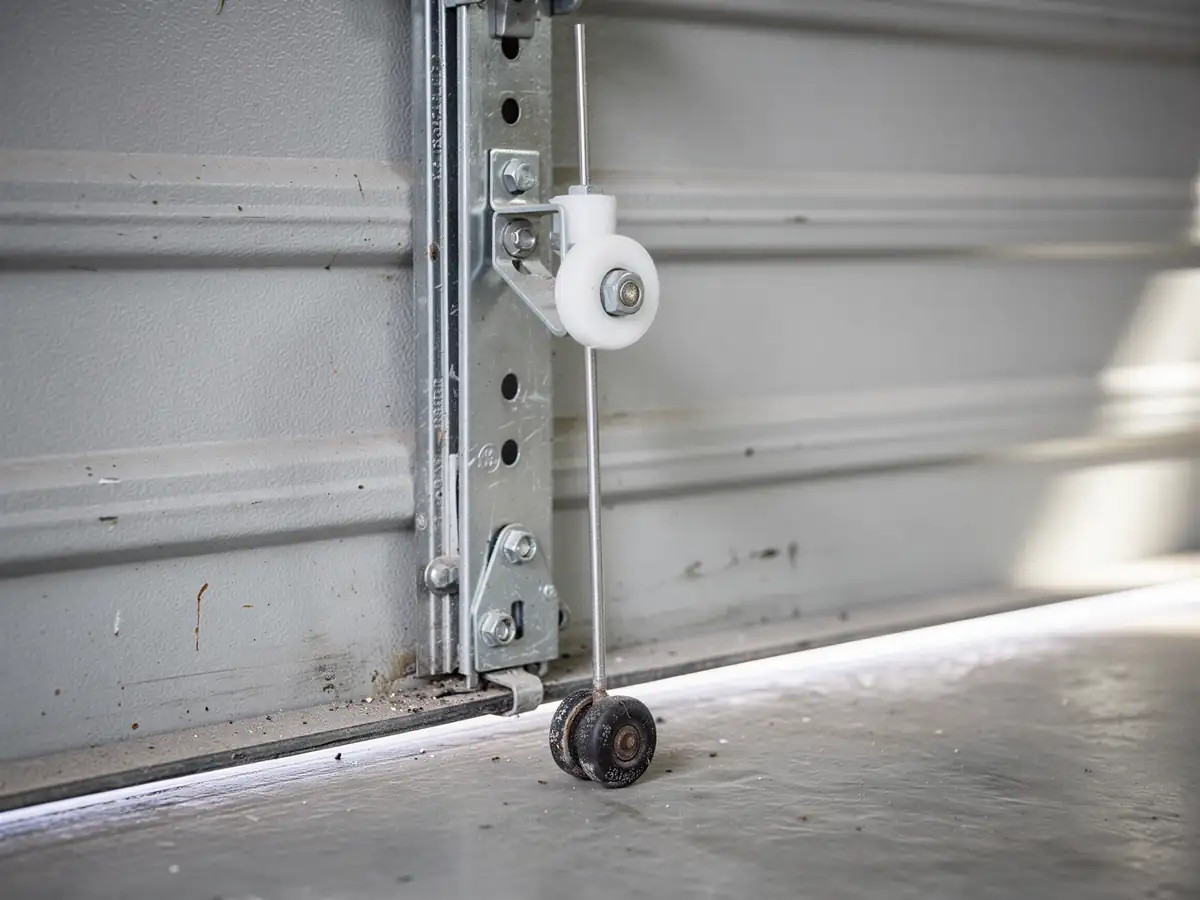
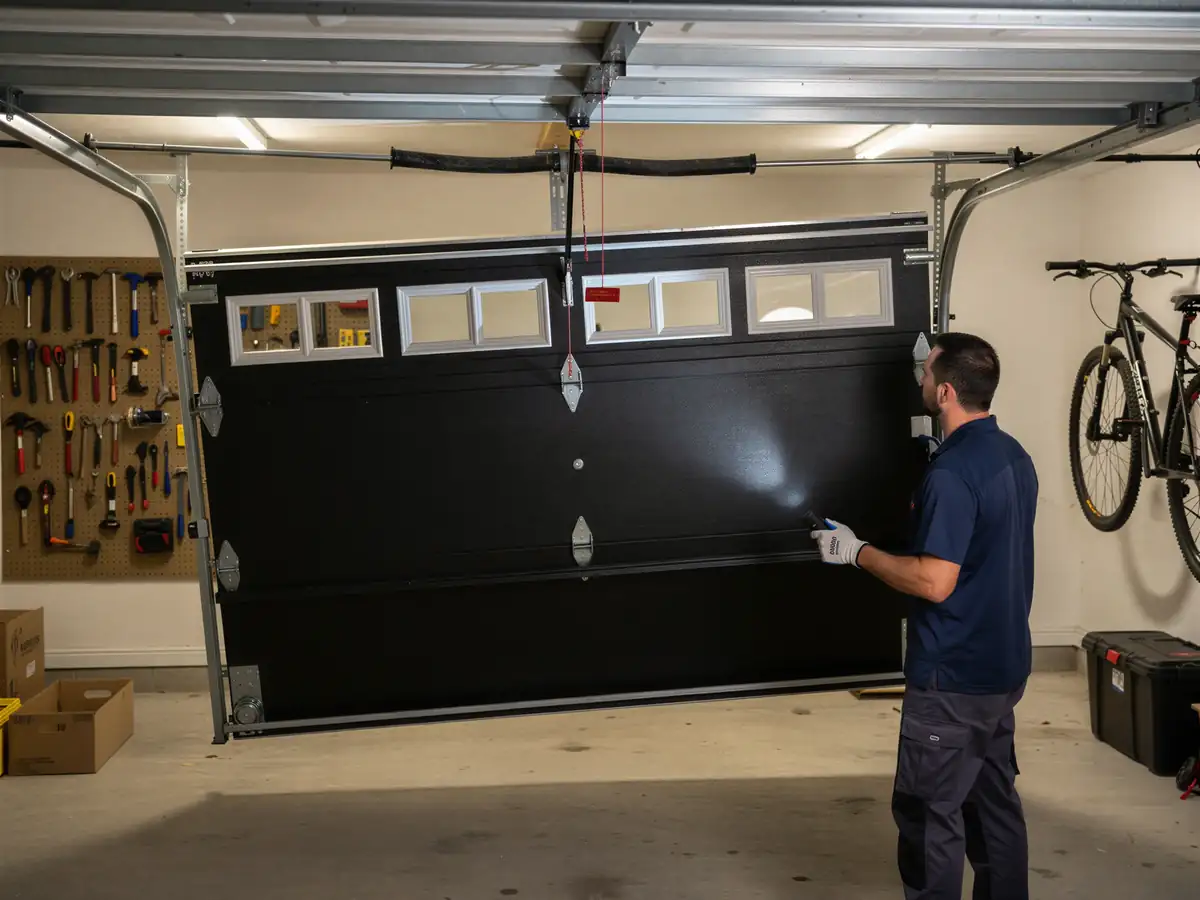
If the door is sitting crooked in the opening, hanging lower on one side, or one or more rollers have jumped clear of the track rail, that's a door off track. You might hear it before you see it - a grinding or scraping sound as the door travels, or a hard stop partway up or down where the roller catches metal instead of running in the channel.
Sometimes it's obvious: the door stopped mid-travel and won't go further in either direction, safely jammed against the bent section. Other times it's subtle - the door still opens and closes but drags on one side, or there's a visible gap between the track and the wall bracket that wasn't there before.
Don't force it with the opener. If a roller is out of the track and the opener keeps pulling, you're bending the track further and loading stress onto the cable drum that it isn't built to take. Disconnect the opener at the release handle and leave the door where it sits until someone looks at it.
What Causes It Around Here
Most of the housing across this service area went up between 1944 and 2007
With the bulk of it dating to the 1960s and '70s across the sixteen communities we cover. Doors and track hardware from that era were sized for the original door weight - lighter wood or thin steel panels - and a lot of those openings have since had heavier insulated doors dropped onto the original track and bracket hardware, which was never rated for the extra load. Track brackets loosen, the rail flexes under weight it wasn't built for, and a roller eventually walks itself out of the channel.
The other half of it is heat
This area sits in a severe heat climate band, and garage temperatures here run high enough, long enough each summer that the metal track brackets and the wood framing they're screwed into both move - expansion in the heat, contraction overnight. Over years that cycle works screws loose in the jamb, and a track bracket that's even slightly loose lets the rail twist out of alignment under the door's own weight. Add a slammed door or a car bumper tap to an already-loosened bracket, and that's usually the day it jumps.
The Complications
A door off track isn't always just a track problem. If the door dropped hard when the roller came out, check the bottom panel and the corner brackets - aluminum and steel both dent, and a bent corner bracket won't hold the next roller in line either, so you can fix the track and still have the door jump again in the same spot.
On older openers, a door that's fought the track for even a day or two can strip the drive gear or burn out the motor trying to force a door that won't move freely. That's a separate repair from the track, and it's one we see paired with track jobs often enough in homes built before the 1980s that we always test the opener once the door runs free again.
We don't recommend DIY track bending on a door that's still under spring tension - a torsion spring holding a door at the wrong angle is not a safe thing to be near with a hammer. If the track is bent in more than one place, replacing that section is usually faster and holds up longer than trying to straighten it back to true.