What You Pay
We're not going to print a number here, because what you pay depends on what's actually going into your garage. A basic chain-drive replacement on a standard door is a different job than swapping to a belt-drive unit with battery backup, and if your bracket or header is from the original 1960s-70s build, there's often retrofit work before the opener itself even goes in. Houses in this service area were built across a long stretch, 1944 through 2007 with the median landing around 1979, so the starting point varies house to house even on the same street.
What drives the cost conversation: horsepower needed for the door's weight and size, whether you want a battery backup (worth asking about given how often summer heat events here knock out power), and whether your existing wiring and wall panel need updating to run a modern unit safely. We'll look at your setup and give you a real number before any work starts, not a phone-quote guess. If your opener is still under 10 years old and just needs a sensor or gear kit, replacement usually isn't the right call, and we'll say so.
What You Are Seeing
The door doesn't respond to the remote on the first press, or it starts moving and stops halfway. You hear grinding instead of a smooth hum, which usually means a stripped plastic gear inside the unit, not the motor itself. Some owners notice the chain slapping the rail or the door reversing for no clear reason, both common once an opener's logic board or drive gear starts to go.
In a region with a severe heat climate band, the plastic and nylon components inside older openers take a beating every summer. Repeated expansion and contraction from high heat cycles stresses gear teeth and belt material faster than it would in a milder climate, which is part of why openers here often need replacing before they hit the age you'd expect from the manufacturer's rated lifespan. If your unit is from the 1980s or 90s and still running the original chain-drive motor, failure doesn't come gradually; it tends to come all at once, usually during the hottest stretch of the year when the motor's working hardest.
What Causes It Around Here
With housing across this service area built mostly between 1944 and 2007
And a lot of it concentrated in that 1960s-70s wave, a huge number of garages are still running openers that predate rolling-code remotes and modern safety reversal sensors entirely. Some of these units were swapped once in the 80s or 90s and never touched since. That's two generations of opener technology sitting in a garage built for a much lighter, simpler door.
The severe heat here is the other half of it
Openers mounted in an unconditioned garage spend summer afternoons well above the temperature their internal electronics were designed around. Capacitors degrade faster, lubricant in the gear housing breaks down, and the logic boards in older units weren't built with today's thermal tolerances in mind. Combine original-era hardware with decades of heat cycling and you get the pattern we see most: openers that worked fine for years, then fail within a single hot season once a part finally gives out.
The Complications
Older homes in this area sometimes have garage wiring that was never meant to carry a modern opener's load, especially if the house still has its original 1960s-70s electrical panel. We'll flag it if that's the case before we install anything, because running a new opener off undersized or outdated wiring isn't a shortcut worth taking.
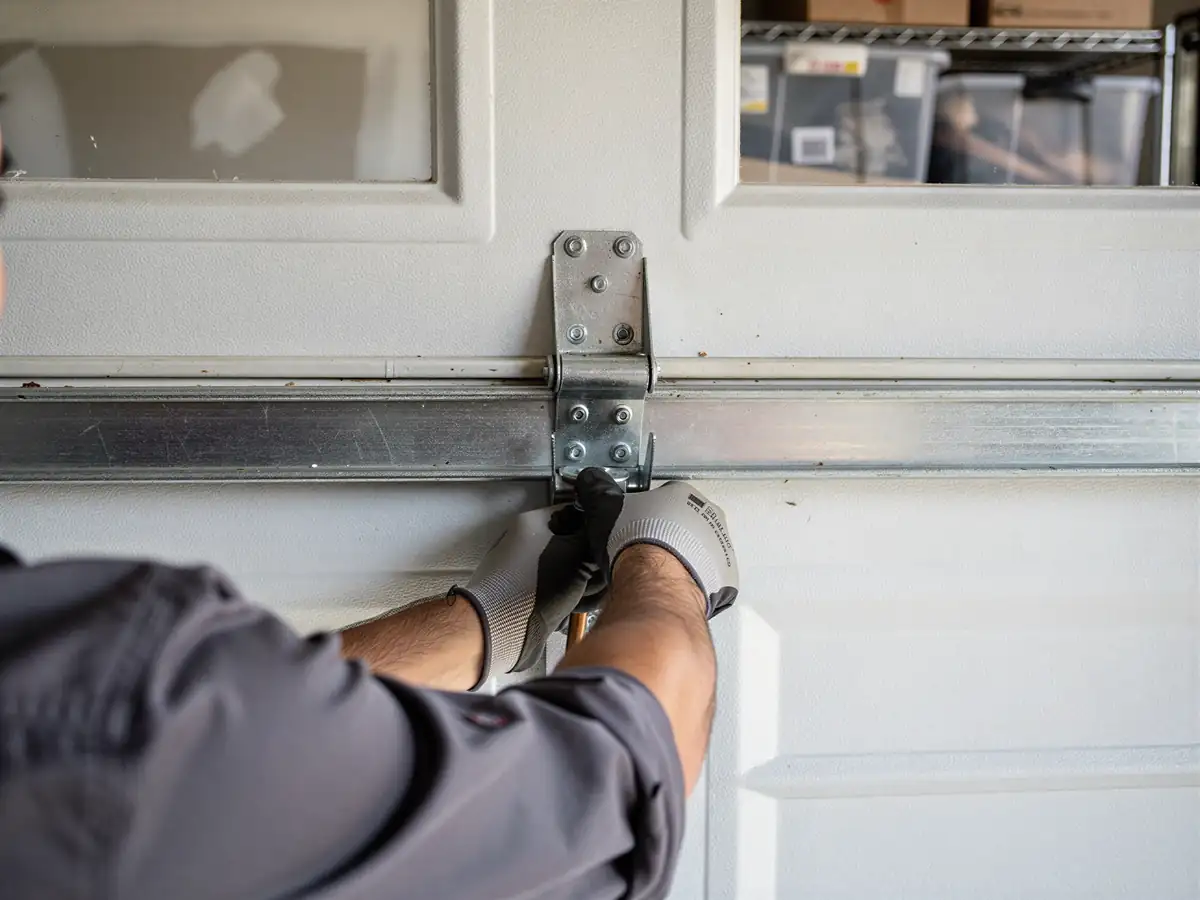
Header clearance is another one. A lot of these original doors were framed for the hardware of their era, and a newer opener rail or mounting bracket doesn't always clear the same space without an adapter or a different mount point. We carry common fixes on the truck, but if your garage needs a custom bracket fabricated, that can add a day to the job rather than finishing same-visit.
One honest limitation: we don't do opener installs on doors with damaged or undersized tracks, bent panels, or springs that are clearly near the end of their life. Putting a new opener on a door that isn't mechanically sound just moves the failure point, and we'd rather tell you that upfront than sell you a part that's going to strain against a bad door.